Despite our overcast skies, constant rain and often grey seas, UK waters can hold colourful species. Wrasse are one of the most successful fish groups on earth and we have many species around our coast. This is my guide to the more common species, fish that are often confused with one another. When compared next to each other though, it is quite clear how varied UK wrasse are.

Ballan wrasse
Let’s start with the biggest and most common – ballans are plentiful and greedy. They are often a sea angler’s first catch, they certainly were mine. The species’ love of rough terrain, often finding homes around piers and harbour walls, brings them within easy casting range of both novice fisherman and experienced alike. All around the UK, where you find weedy gulleys, reefs and man made structure, there will often be a population of ballan wrasse. Despite their reputation as a summer fish, as long as it is calm with some clarity to the water, there is always a chance of one.
This species has been under a lot of pressure from Scottish salmon farms, being taken as a live cleaner fish from South-West waters. I have said before, if you care about wrasse or just where your food comes from, don’t buy farmed salmon. Despite this pressure, they are still holding on in numbers locally.

This species has a large range of colours which can lead to confusion when identifying them. The males are often larger and more brightly coloured, ranging from red to dark blue, with blue and white spots covering the entire body and fins of the fish. Females are more muted, with ‘camo’ green and brown colours being common. Some of the most unusual colour types are the bright green fish, almost luminous. They grow to decent weights too, up to double figures very rarely, fish of 4 pounds above being specimen size. Most anglers will catch them in the half pound bracket, with larger fish often making a surprise appearance. The specimen ballans will have a longer snout and big lips, with the species in general having a longer face profile than it’s smaller (and often commonly confused with) cousin – the corkwing wrasse.

Ballan’s have a real cult following in the lure fishing community and it’s clear to see why, their aggression – both in the bite and the fight, is immense. Once the rod tip thuds with the tell-tale take, the strike leads to a fight to rival any fish for it’s size. The first run, as the fish dives into the nearest hole it can find can be rod breaking, it certainly pays to use high quality tackle. Although the wrasse tire fairly quickly, the first few runs are what keep us coming back for more. I try not to target big ballan wrasse on LRF tackle, it doesn’t usually end well! If you do end up hooking a ballan on light gear, I recommend keeping the rod high and keep it angled against the fish, try to keep your line from catching on any rocks or other obstacles; set the drag loose enough to give way to the runs but keep pressure on the fish where possible. I use my finger on the spool as a brake, letting the fish go if I feel the line could give way. It will be more luck than judgement most of the time but keeping calm and trying to steer it from the snags will help! If you are using the heavier gear which is more suitable for these fish (I’m talking 20 or 30g rated rods and 20lb line), you can afford to bully them more but following the advice above you will lose less fish.
A common wrasse tactic is to bury themselves in the nearest crevice or weedbed, this can prove to be a waiting game. I have waited 20 minutes before, gently giving the fish slack line, until it feels confident to move out of the snag. I then wind like hell to get it in! If you get snagged up and still feel the fish on the end of the line, it pays to wait.

Lure choice can be varied, for smaller ballans any soft plastic or even metal jigs will do. For the bigger fish, on heavier tackle, I like to use 3-4 inch soft plastic paddle tail shads or worms/senkos. Other interesting lures to use are crayfish, crab or prawn imitations, all will get bites. The absolute top lure I have found for them, so much so that we call it ‘wrasse-crack’, is Berkley Gulp Sandworm in Camo colour. The colour is a perfect match for ragworm and the texture of the worm is just tough enough to rig weedlessly effectively. Using half a worm on a size 1 weedless hook is a solid tactic when you just want to search an area out. Another fine lure is the Ecogear Aqua Bream Prawn, ballans and corkys love to munch them.

Corkwing wrasse
For me, one of the finest looking species we have in our waters, corkys are truly special. Only small in size, never quite reaching a pound in weight, these fish are rocket fuelled and tropical in their looks. Just like the ballan, you can find these fish all over the UK, but they are far more common on the west coast and especially in the south. These fish are under less pressure from the salmon farming industry thankfully, being a colourful addition to the species we have in our seas. You will find them in amongst cracks in boulders, in weedy gulleys, around harbour walls and piers, being smaller than ballans they can be found in surprisingly tight places. They are definitely one of my favourites, they always bring a smile to my face when I catch one.

These are the species that are often confused with small ballan wrasse but they have smaller lips and mouths and a more steeply sloping head. They also lack the many spots of the ballan, with the males sporting swirling orange, blue and green stripes on their cheeks. The female’s cheeks are less colourfully marked but still have a few stripes. Both the female and male have a well defined black spot in the centre of the base of the tail. Often their scales will have blue or green in them, along with reds and oranges, In breeding season particularly when the males are guarding eggs, they can be quite spectacular in colour, as seen in the specimen below.
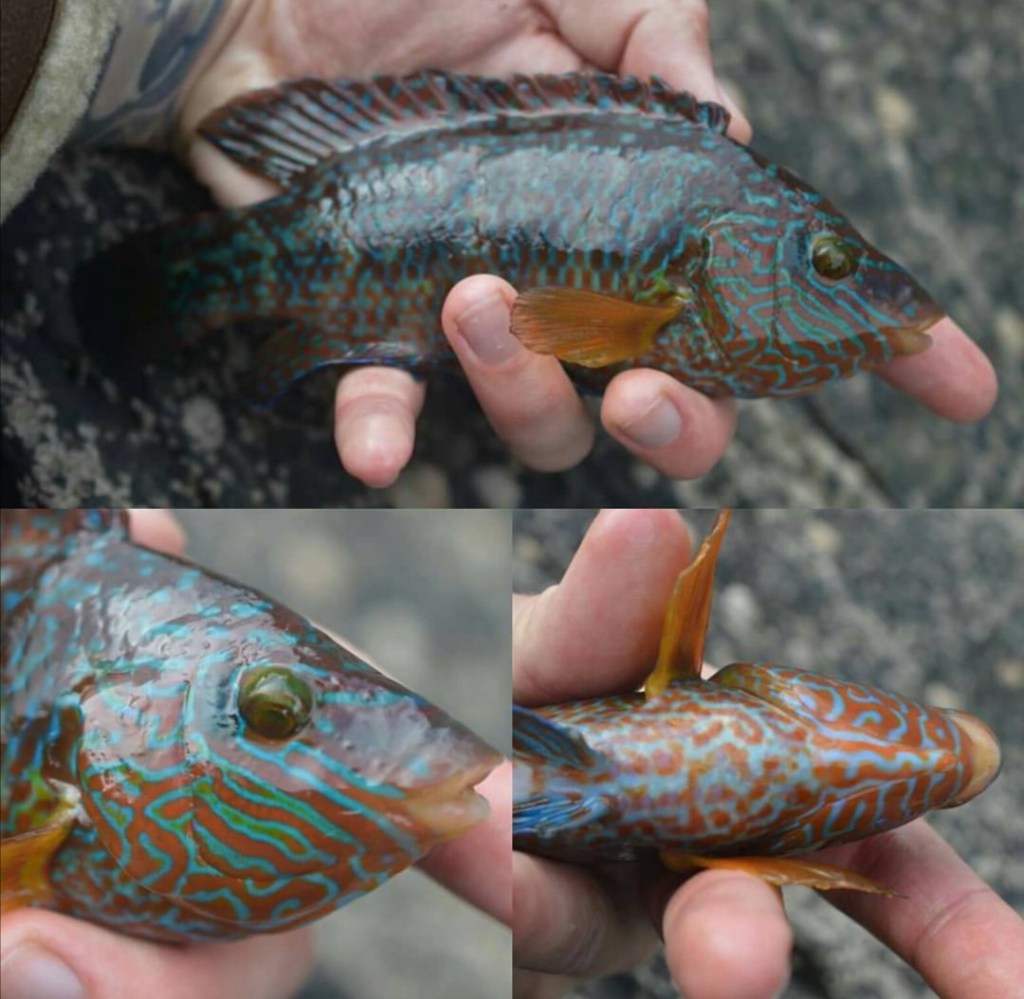
The fight from a corky is impressive for their size, often out-fighting ballans of the same weight. They use their plate shaped bodies against you, wheeling around until they are beat. They are the perfect LRF target, with plenty of strength but very little chance of snapping you off. Cold weather doesn’t seem to put them off either, so you can enjoy their tropical colours even in the depths of winter.

With their smaller mouths, smaller profile lures are needed. Corkys will attack shads and large worm lures but rarely hook up. I prefer to use dropshot techniques or scaled down Texas rigs to target them, using a small section of scented worm or unscented worm/shrimp imitations. You will feel plucks at the lure before they attempt to eat it, it is worth giving them a chance for the bite to build first. These little fish pack an aggressive nature and, once they have decided it’s worth eating, will attack most small lures with venom.
Goldsinny wrasse
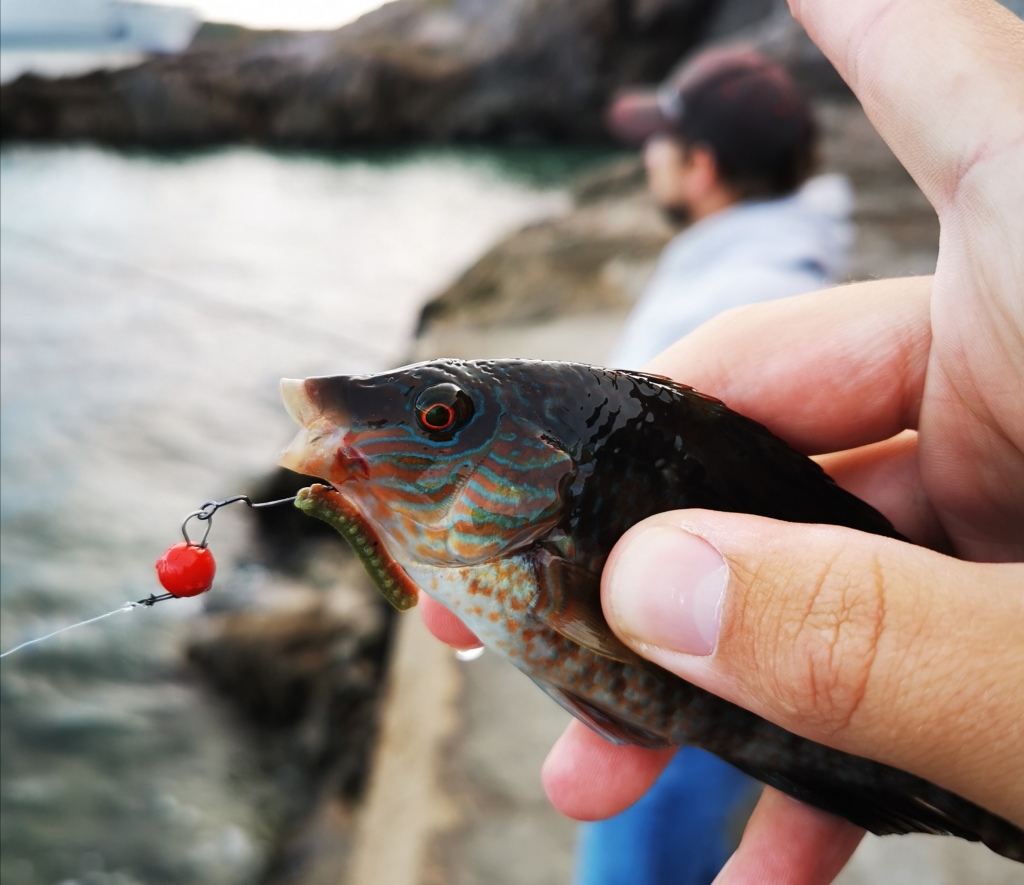
The often maligned goldsinny is rarely at the top of angler’s wishlists. These fish are neither rare nor large. In fact they can often get in the way of catching more exciting species, leaving them with the unfortunate title of a pest species. Although I can’t say they are a favourite of mine, they do brighten up a tough session when little else is biting. They are common around all the usual wrasse marks, often being very numerous in harbours. They are also one of the only wrasse species that regularly feeds at night.

These fish are also very subtle in their colours, with light blue often lining their flanks like a ribcage. Goldsinny are slim in profile with a black spot at the base of their dorsal fin and at the top of the tail fin. These wrasse are definitely the goofy relation, with prominent teeth that protrude from the mouth. I have caught them in their usual shades of brown and pink, also in Sutton Harbour I have caught one with gold markings. This fish I have caught at least three times now and it is very distinct, a truly unique and hardy goldsinny.

Ultralight LRF tackle is a must to target these fish, small hooks – size 10 or smaller, light weights and light fluoro/braid. These are keen biters who rattle away your lure until there’s nothing left. If you haven’t caught one or need one for a species hunt, I recommend fishing a harbour wall with a tiny jighead, dropshot or split-shot, my lure choice would be something they can nibble on – a small section of Gulp or Isome willl do the trick perfectly. One I have found the fish, I dead-stick the lure, keeping it perfectly still, letting the bits build until I feel it has the hook in it’s mouth then strike. They are not going to blow your mind in the fight but they are always a nice addition to a species haul.

Rockcook wrasse
And here is where we get into species I have yet to catch on lures… The rockcook wrasse pictured below are not mine, they were caught by Devon Lerfer aka Richard Salter. Although I have tried, I haven’t been lucky enough to catch one of these blue beauties. These fish are truly stunning, looking like they have been struck by electric blue lightening. The males are blue on nearly every scale, making them very distinct. In classic wrasse fashion the females are a lot duller but still have blue stripes on the cheeks.

I asked Richard what advice he would give when targeting rockcook and he said,
”In my experience it’s simple, something like a size 16 hook on a dropshot rig. A wormy lure (scented). Rockcook have always been right in amongst the weed in the areas you expect to find Corkies and Goldsinny when I’ve caught them, they always try to dig themselves into the weed when hooked.”
Rockcook have tiny mouths and seem to turn up when least expecting it, they are certainly more common that you would think though. So it is worth scaling down in weedy areas with healthy populations of wrasse. The only area of the UK you probably won’t find them is the east coast. They are a small fish worth taking the time to find, they are on my target list this year!

Baillons wrasse
I have Rich to thank again for these photos, he truly is the wrasse king. The baillons wrasse is a very close relation to the corkwing wrasse but much much rarer. You are only likely to find them in any numbers in a few spots along the south coast. The Torquay area occasionally turns up a few to species hunting anglers. Swanage Pier is probably the most famous mark for them and that is where Richard caught his, fishing a dropshot rig close to the pillars. As is usual with wrasse, a section of Gulp Sandworm did the trick.

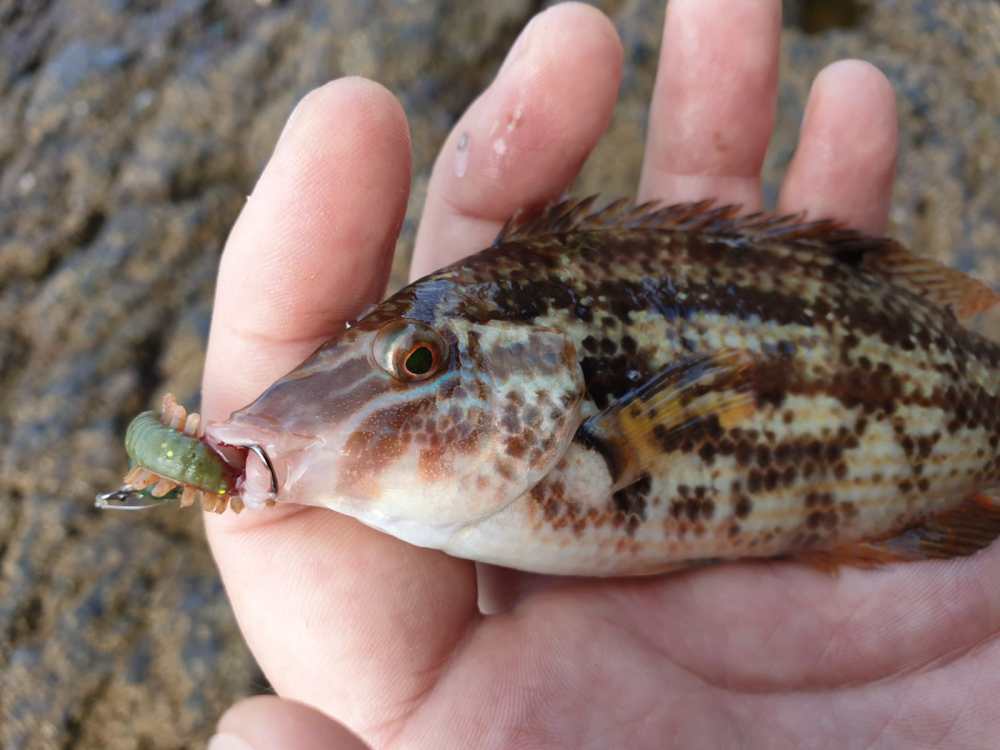
These can be difficult fish to identify, especially in comparison to corkwings. They have a similarly shaped head and body, even the patterning on the flanks bears a resemblance, including the same black spot at the base of the tail. The best way to ID them is to locate the black spot, three quarters along the dorsal fin. The blue stripes along the cheeks are far less in number on the baillons as you can see in the images here. On the males the colours are more pronounced, having a very orange hue in the fins and scales.
Cuckoo wrasse
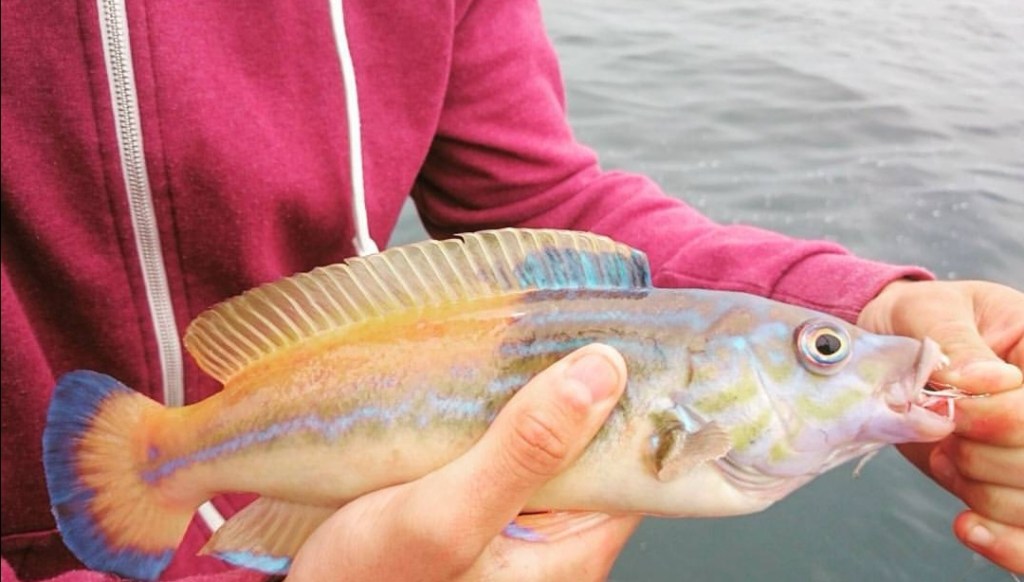
The deepest dwelling, most colourful of the UK wrasse. It is quite rare to catch a cuckoo from the shore, although certainly do-able in deeper water. I have included it here for reference, if I’m lucky enough to catch one from the shore I will get back to this post and update it.
As always, thank you for reading.
For further reading/watching please check out the following links.
My page on Facebook
https://www.facebook.com/benbassettfishing
My page on Instagram
https://www.instagram.com/benbassettfishing/
Prime Angling – One of the best places to get your fill of LRF lures
https://www.primeangling.co.uk/
Street Fishing London – A new exciting lure fishing store
https://www.streetfishinglondon.co.uk/
Richard Salter aka Devon Lerfer – LRF videos
https://www.youtube.com/channel/UC2GYWRxohx3J6Qq7vFqZS0w
Neil Sutherland at Aquazid Studio – LRF based T shirt designs and more
http://aquazidstudio.com/
Simon Kingdom at Osborne & Cragg – Plymouth based tackle shop with a great selection of lures and everything else
https://www.facebook.com/osborneandcragg/
Art Of Fishing – Wadebridge based fishing tackle porn
https://www.artoffishing.co.uk/
Dominic Garnett – Top angling author and a real fan of LRF.
https://dgfishing.co.uk/
 Ben Bassett - LRF Blog
Lovely piece, I’m really enjoying reading all of these Ben. I am one of the lucky ones to have caught a cuckoo from the shore. More by luck than judgment on a holiday to Falmouth about 6 years ago. The only one of these I’m yet to catch is the rock cook, I had a surprise Baillons from a pier in Kent two years ago. I’m back in the south west for a holiday in a few weeks (brixham) so maybe I’ll find a rock cook then!
LikeLike
Thanks Ben, you have done well! Brixham is probably the best shout of a rockcook, I had my first there the other day. I still am waiting for a baillons. The cuckoo I will just have to wait for me I think.
LikeLike
Cool caught 5 wrasse using your method!
LikeLike
The deep Scottish lochs are the place to catch them from the shore. I have had all 5 (ballan, corkwing. goldsinny, cuckoo and rock cook in a day’s fishing). Little chance of a baillons so far north unfortunately
LikeLike
Hi Ben
Having only just got on to wrasse and being currently without a scale I was wondering what you think a 50cm ballan would be weighing in the region of? I had three absolute pigs the other day coming in at a shade under 50cm each.
I know it’s impossible to give an accurate figure but it’s be nice if I had a ballpark from someone with experience
LikeLike